NO Gains with Pain
I have had this conversation with every single one of my clients. “YOU DO NOT WANT TO FEEL PAIN!” In a session with me or especially on your own.
The mantra in the United States is universal: “No Pain, No Gain.”
This phrase is really just the harbinger of injuries to come.
While modern history will tell us this fitness catchphrase comes from the likes of Jane Fonda and the golden-era bodybuilders like Arnold Schwarzenegger, the cultural reference is far older, going back to Benjamin Franklin and beyond.
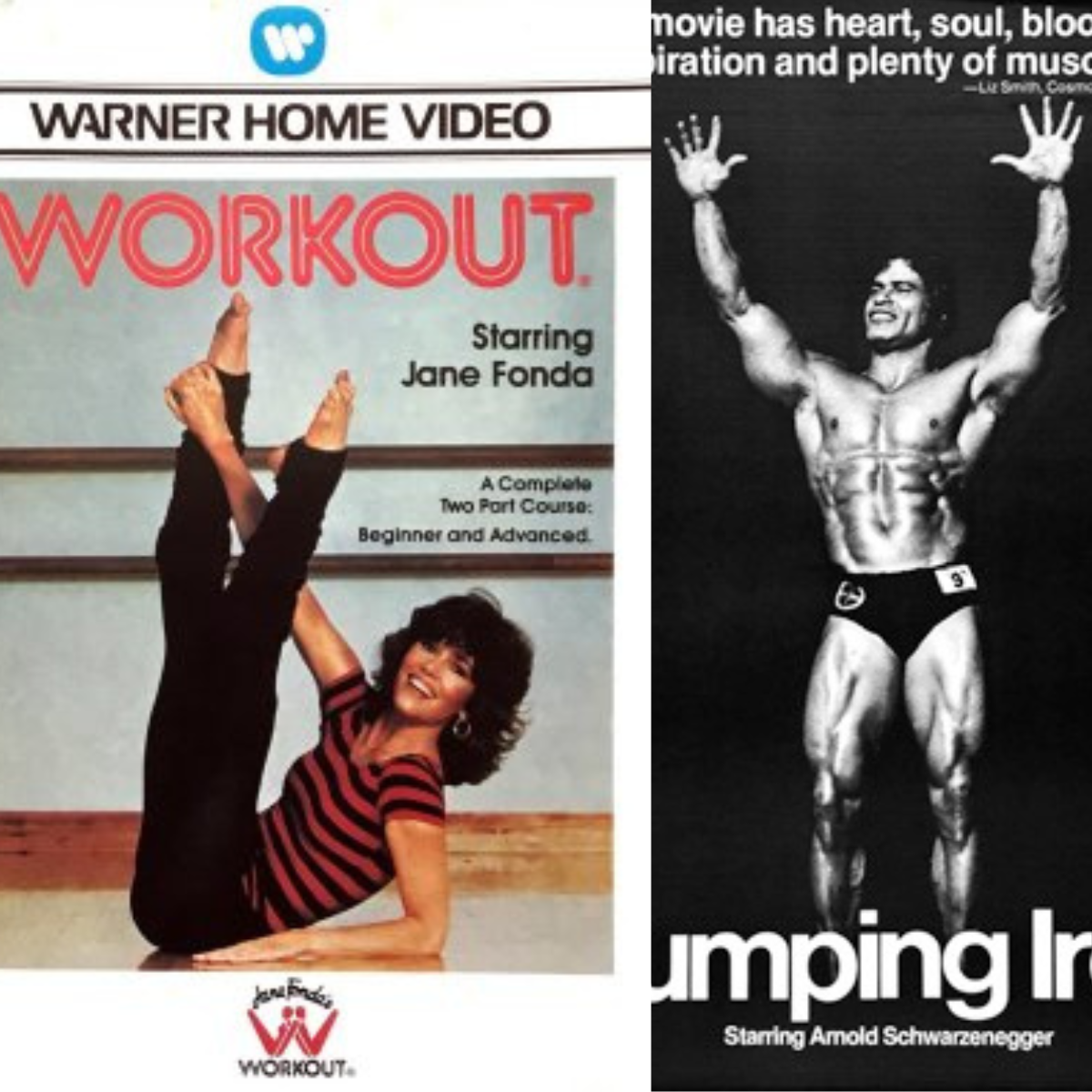
Jane Fonda’s Workout Cover and Pumping Iron Cover
Why is it wrong? 1. You never want to experience “true” pain during a workout 2. When these fitness icons said it, they didn’t actually mean “pain”; they meant the burning sensation (“pump”) that can occur as blood rushes to muscle groups in the body.
In the United States (and other parts of the world), we have become obsessed with all-out efforts, personal records (personal bests), 1-repetition maximum lifts, and so on… we have become obsessed to the point that every workout needs to be better than the last, and we have convinced ourselves there is “no excuse” for not achieving it.
What I have learned along my fitness journey: this mentality only leads to injuries that destroy progress (and reverse current fitness levels) and, at best, to a plateau in physical performance. Every workout should not be designed to destroy you (and we likely need to save these workouts for competitions or designated testing periods).
Your workouts need to be designed to sustain progress. And sustain the progress indefinitely.
How can you do this?
In weightlifting, it’s best illustrated from a story, the story of Milo of Croton:
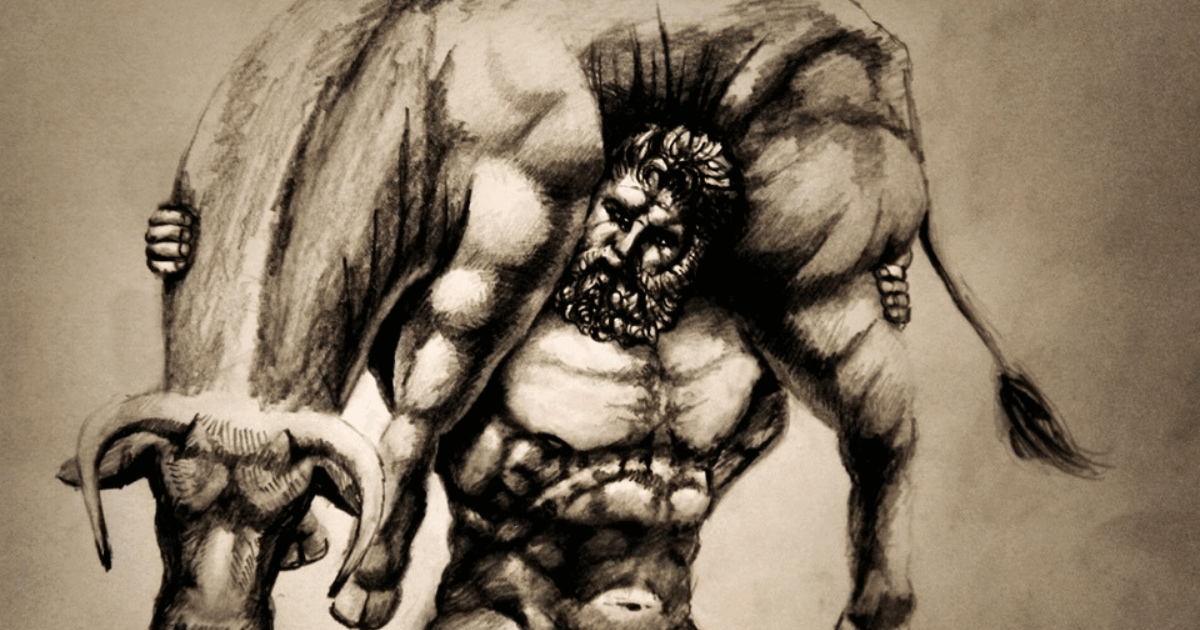
Milo of Croton Training
The story goes like this: as part of a self-training program, Milo would pick up and carry a calf every day as it grew, to get stronger for the Olympics. This story is a myth and legend that became the basis of what we now know as “progressive overload” training.
Progressive overload training is based on the idea that we will add weight each week and see incremental improvement over time indefinitely. I call this the “beginner’s fallacy.”
While progressive overload can work for a time, it cannot be maintained indefinitely, especially for the everyday person.
The real way to get strong is not to continue to lift a calf until it’s a bull, but to lift a calf until you are unable to lift it any longer, then restart with a newborn calf, and keep doing this until you can lift the bull.
An alternative to progressive overload, which I have found works a lot better, thanks to Pavel Tsatsoulin (the Kettlebell legend), is the Step Loading (“Constant Weight Training”) approach.
Step loading is probably one of the safest methods for beginners and everyday lifters because it helps us build and maintain strength.
In Kettlebell, this is a very easy concept to grasp. If you can only do 25-lb kettlebell swings and 15-lb clean and press, you will stick with these weights for an 8-12-week period. Doing 2 workouts with these weights every week until the weights start to feel “easy” to you, then you will jump up in weights and repeat the cycle.
For the more advanced lifter (or aspiring powerlifter), cycling (“Wave Loading”) is the foundational training model. Cycling creates the opportunity to really push it for two weeks out of the month.
“Variable Loading” is the other model for more advanced lifters. Where you can adjust your load and your intensity in a more chaotic manner. This article is not the place for a deep dive into all of these training modes.
I use these training modes to illustrate the main idea that the goal is not to PR in every training session, and the elite athlete does quite the opposite, so why would you think it works for you?
I created this graph to illustrate, at a high level, the way these different methods play out.
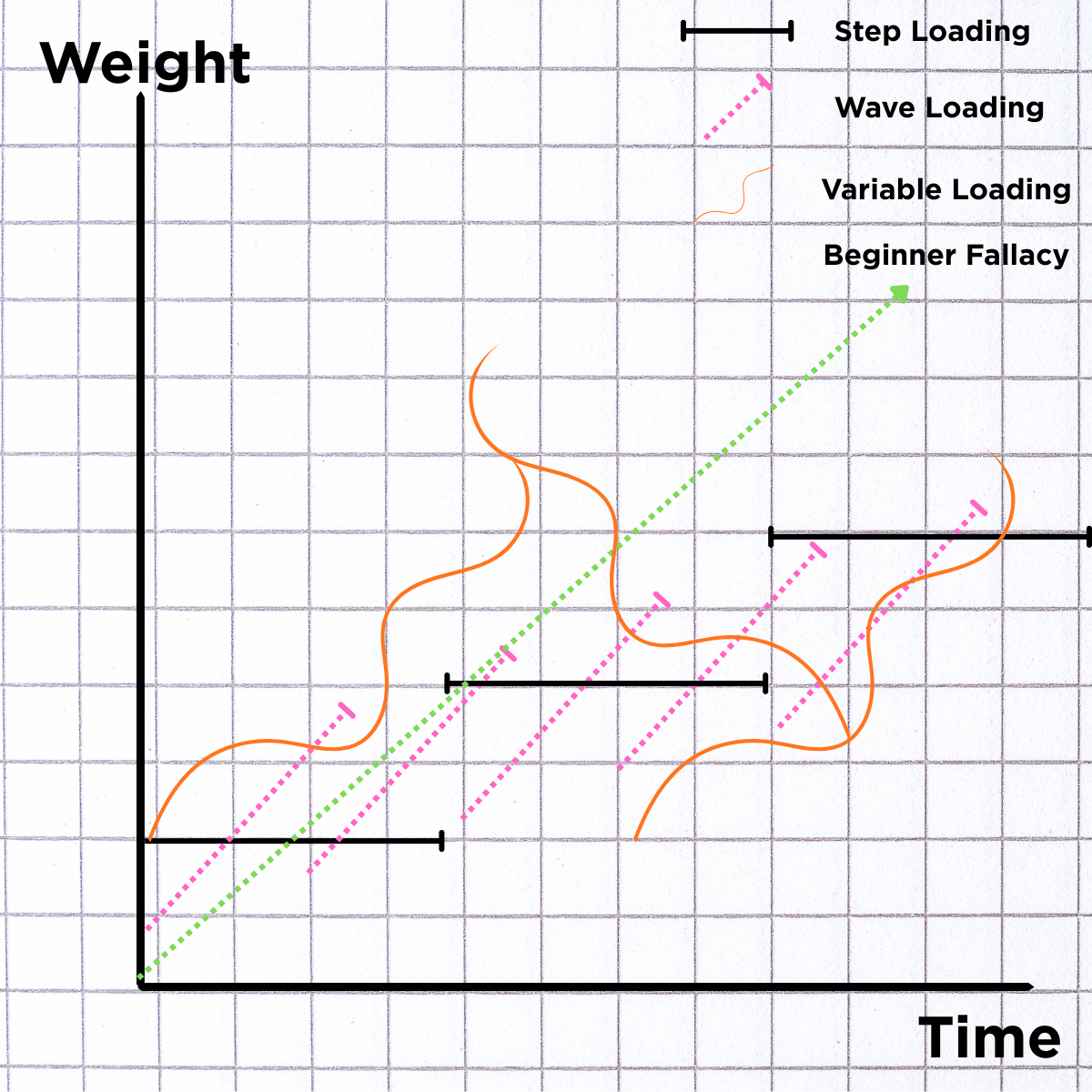
Strength Progression over time with different training methodologies
What’s interesting about these weightlifting methodologies is that they can be sustained, and many of these principles carry over to endurance exercises as well, including biking, running, and swimming.
And guess what? The same rule applies.
The most likely time for a runner to get hurt is after an intense and unnecessary increase in volume in a single workout. And what else is surprising is that if you look at the elite runners around the world (let’s exclude sprinters). They are not going all out in almost any training run.
A majority of elite athletes’ runs are considered “easy runs” where their heart rates are in Zone 2 and below. And the speed workouts are centered around “sweet spot” training right below Lactate Threshold, in other words, right below the start of the real “pain-level” running.
Many workouts for elite runners around the world are “easy” for them, or they don't kill themselves. In Kenya, Ethiopia, and Norway, they found out that sustainable progress and balancing workloads are the key to running faster over the long-term (there are no shortcuts to fitness - it’s only consistency), and the methodology breaks into two paths: for the beginner and intermediate, it’s the Norwegian Singles Method, and for the elite / Olympian, it’s the Norwegian Doubles Method.
The truth about pain is that when you have it, it’s systemic and it eliminates any potential gains to be had over the long-term. Without pain and with consistency, you will be able to sustain training longer and make it more enjoyable as you see your continued progress over the long term.
Yours in Endurance,
Michael Jordan Pilgreen